Messier 31 in H-Alpha Light
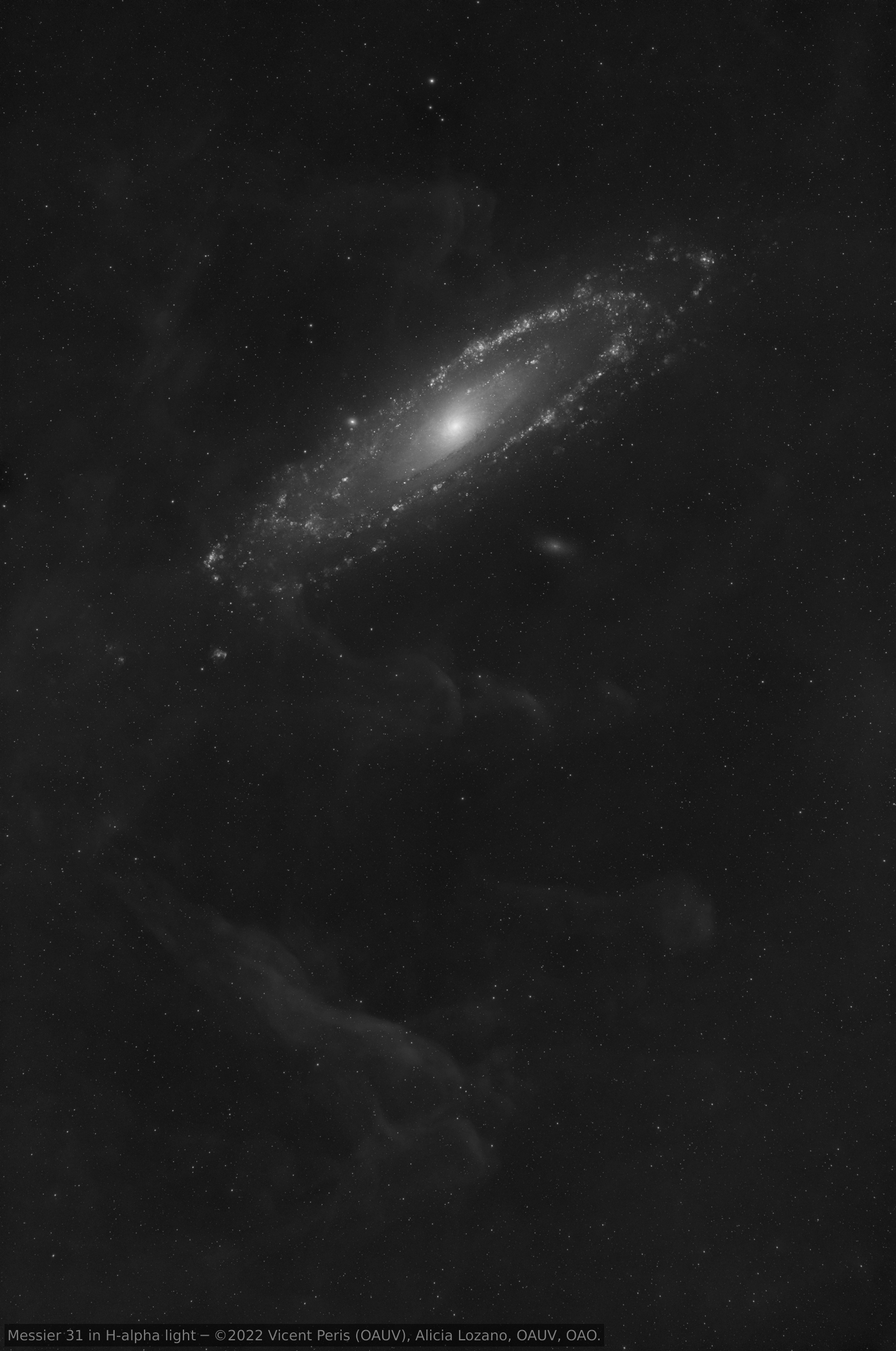
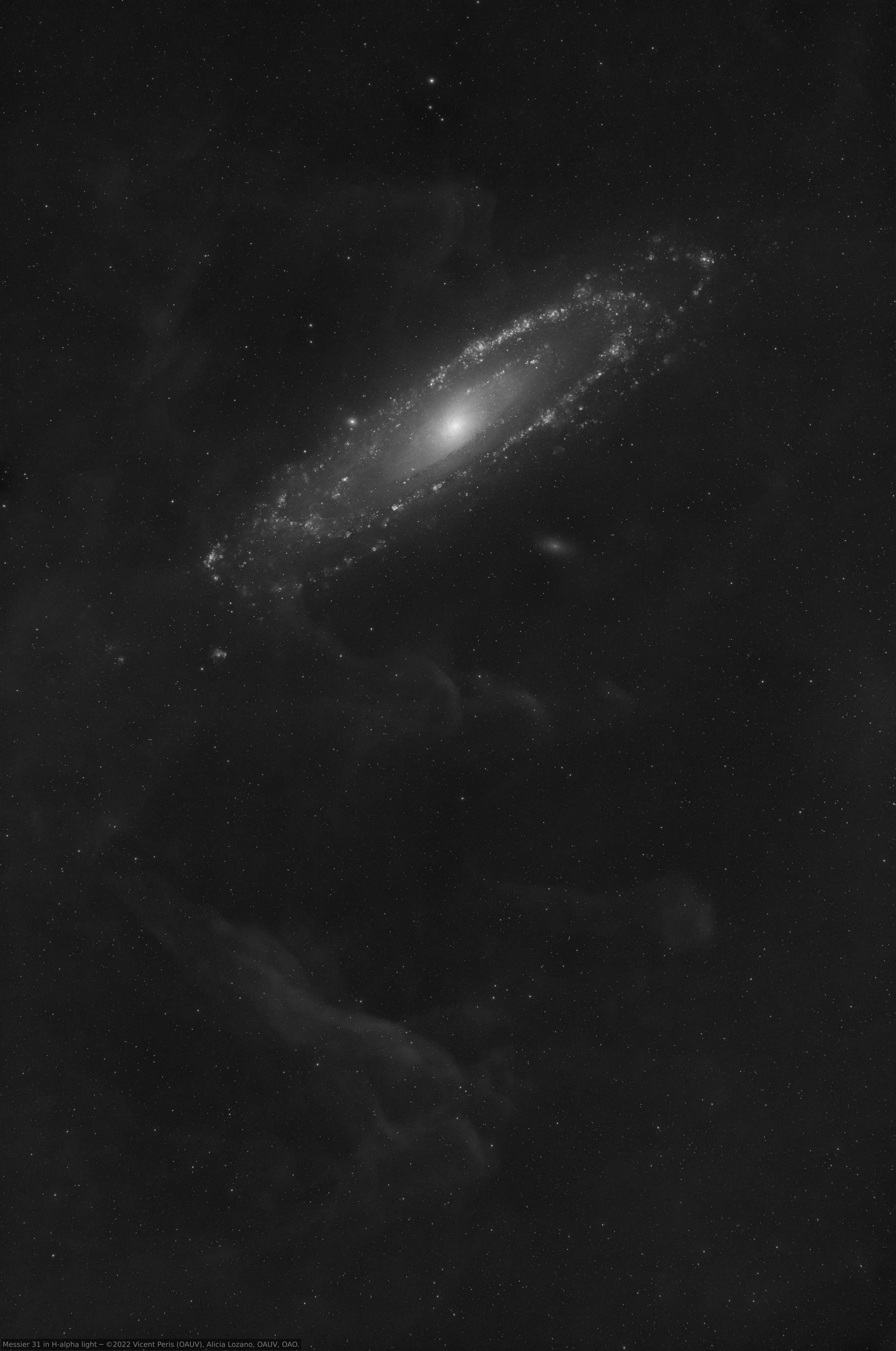
The Andromeda Galaxy (Messier 31) is the largest member of our Local Group of galaxies. It is located 2.5 million light-years away from the Earth. In this picture we photograph its emission nebulae by using a narrow Hydrogen-alph filter.
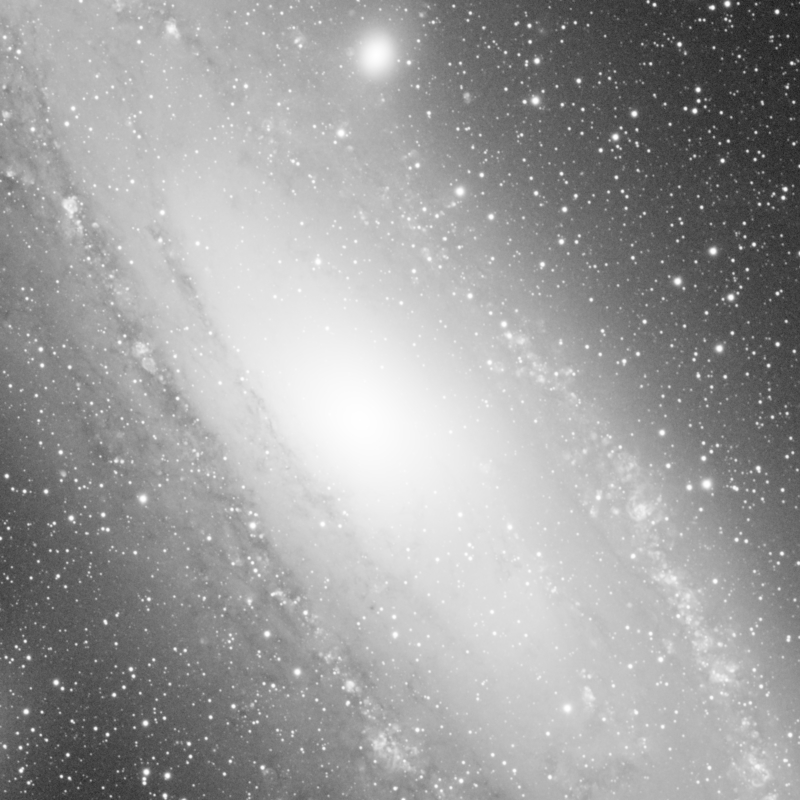
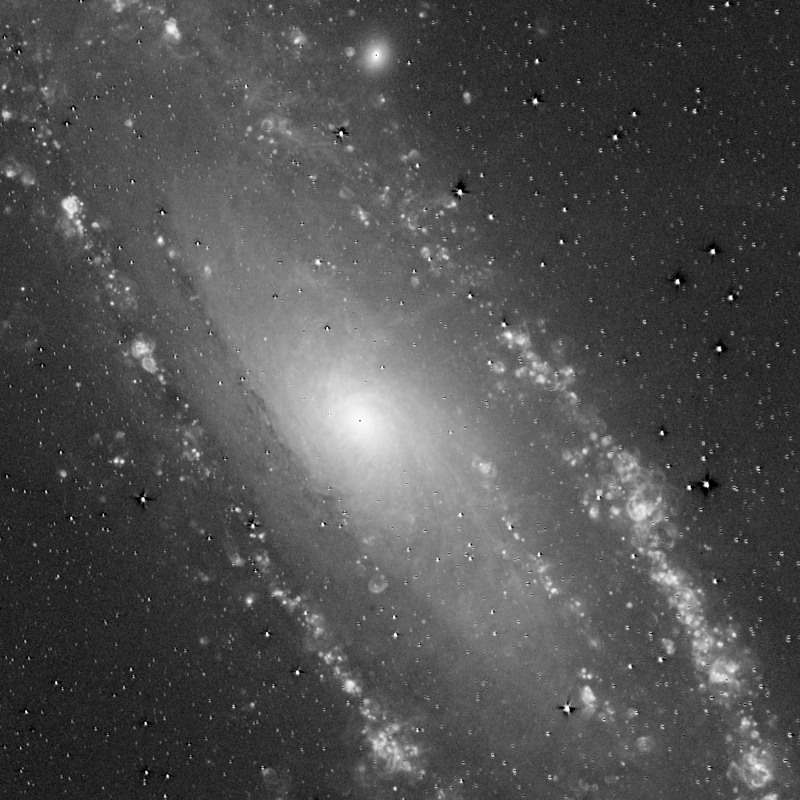
Narrowband filters isolate the light-emitting gas from the light emitted by stars. But not everything in a narrowband image comes from the gas emission line itself. In a narrowband filter we still have light coming from light sources emitting a continuous spectrum; mostly stars in this image. The main idea behind this picture is to isolate the pure H-alpha emission line by removing the continuum emission coming from the stars in the galaxy. In this way we can unveil the delicate geometry of hydrogen clouds forming a spiral structure right to the galaxy core. While the H-alpha image of the galaxy shows its classical appearance with a bright bulge at the center, below we can see the effect of subtracting the continuum light to isolate the pure H-alpha emission line.
Hover the image to see the effect of this processing technique.
Links to related material:
Messier 31 processing notes on PixInsight website.
The image in the PixInsight Image Gallery.
The image on the OAUV website.
The image on AstroBin.